The Thrissur Pooram is one of India’s most spectacular cultural celebrations, drawing thousands of travelers to Kerala every year. Known for its grand elephant processions, rhythmic percussion performances, and dramatic fireworks, this festival transforms the city of Thrissur into a vibrant cultural hub.
If you are planning a unique cultural trip in 2026, this guide covers everything you need—from dates and travel planning to booking the right tour package—so you can experience the festival without hassle.
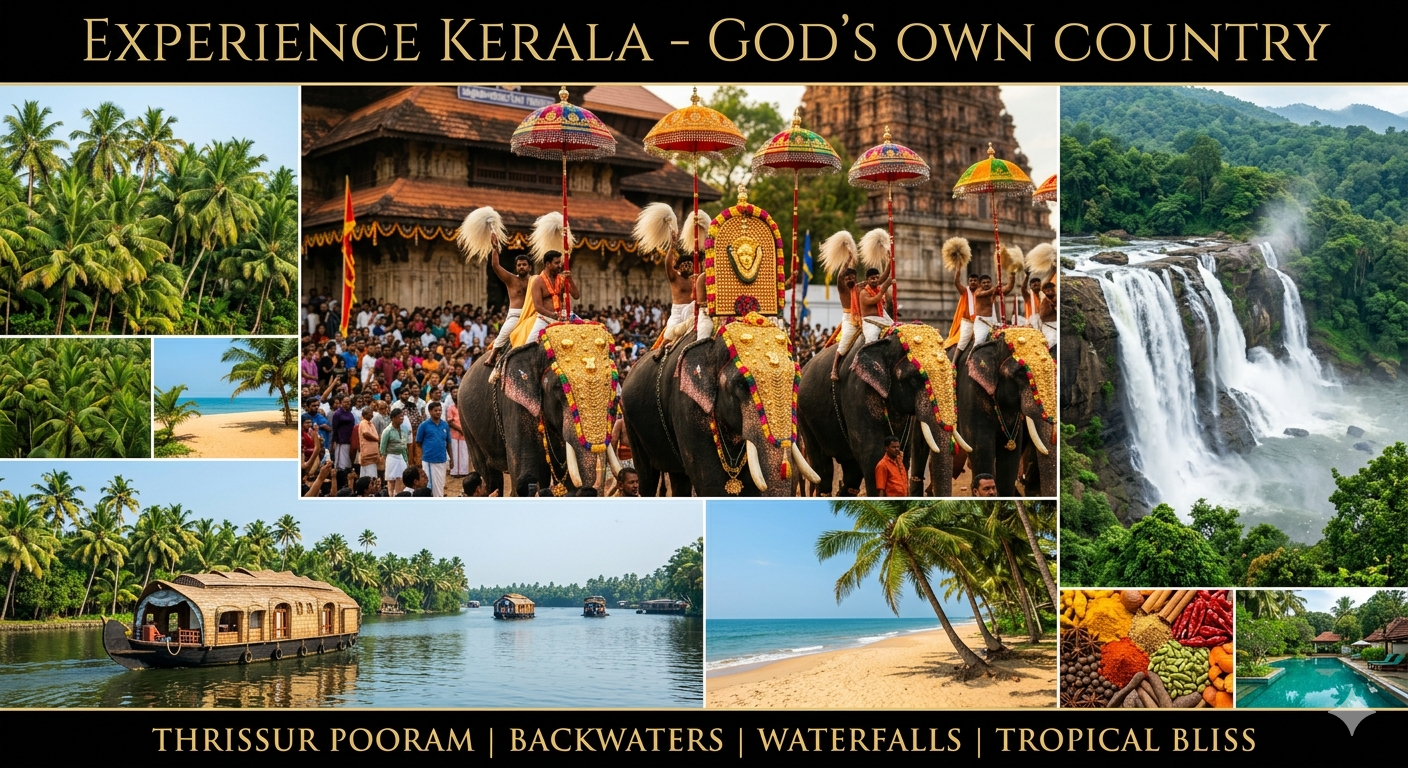
Why do we celebrate Thrissur Pooram?
Thrissur Pooram is celebrated as one of the most spectacular temple festivals in Kerala, India, primarily to honor Lord Shiva (at the Vadakkunnathan Temple) and to mark a historic shift in festival traditions.
Here are the main reasons why it is celebrated:
The “Festival of Festivals” Origin
Before Thrissur Pooram was created, the largest festival in the region was held at the nearby Arattupuzha Temple. However, due to a devastating torrential rain, the local ruler (Raja) of Sakthan Thampuran was not allowed to participate. In response, he decided to create a grander, more inclusive festival right in the heart of Thrissur.
A Royal Vision (Sakthan Thampuran)
The modern celebration owes its existence to Raja Sakthan Thampuran (the ruler of the Cochin kingdom) in the late 18th century. He unified ten local temples on either side of the Vadakkunnathan Temple and decreed that they would all come together to pay homage to Lord Shiva. He designed the Pooram to be a public, competitive, and vibrant display of devotion, breaking away from traditional temple exclusivity.
Honoring Lord Shiva
At its core, Thrissur Pooram is a religious event dedicated to Lord Shiva of the Vadakkunnathan Temple. The two main competing groups (representing the Thiruvambady and Paramekkavu temples) carry their deities (idols of Goddess Parvati and Lord Krishna) on intricately decorated elephants to the Shiva temple grounds, symbolically visiting the supreme deity.
A Celebration of Rivalry and Unity
The festival is famous for the friendly rivalry between two groups of temples:
- The Western Group (Thiruvambady)
- The Eastern Group (Paramekkavu)
This rivalry manifests in:
- Kudamattam: Teams competing to display the most beautiful, changing color umbrellas on elephant backs.
- Ilanjithara Melam: A legendary percussion ensemble where over 200 artists play traditional instruments like chenda and maddalam in a thrilling, face-off style.
Welcoming the Monsoon
Pooram takes place in the Malayalam month of Medam (April-May). For agrarian communities, it also marks the arrival of the summer heat peak, just before the life-giving monsoon rains. The vibrant, energetic celebrations are sometimes seen as a way to appease the rain gods and seek a bountiful harvest.
In short: Thrissur Pooram is celebrated to glorify Lord Shiva, continue the grand vision of a progressive king (Sakthan Thampuran), and showcase Kerala's cultural pride through magnificent elephant processions, breathtaking percussion music, and spectacular fireworks.
Thrissur Pooram 2026 Date & Best Time to Visit
The festival usually takes place in April or May, depending on the Malayalam calendar.
Best Travel Plan:
- Arrive 1–2 days before the main event
- Stay for 3–4 days to explore nearby attractions
- Book early, as demand peaks during festival season
How to Reach Thrissur
- By Air – Nearest airport: Cochin International Airport (approx. 50 km)
- By Train – Thrissur Railway Station is well connected to major cities like Delhi, Mumbai, and Bangalore
- By Road – Smooth connectivity from Kochi, Coimbatore, and other Kerala cities
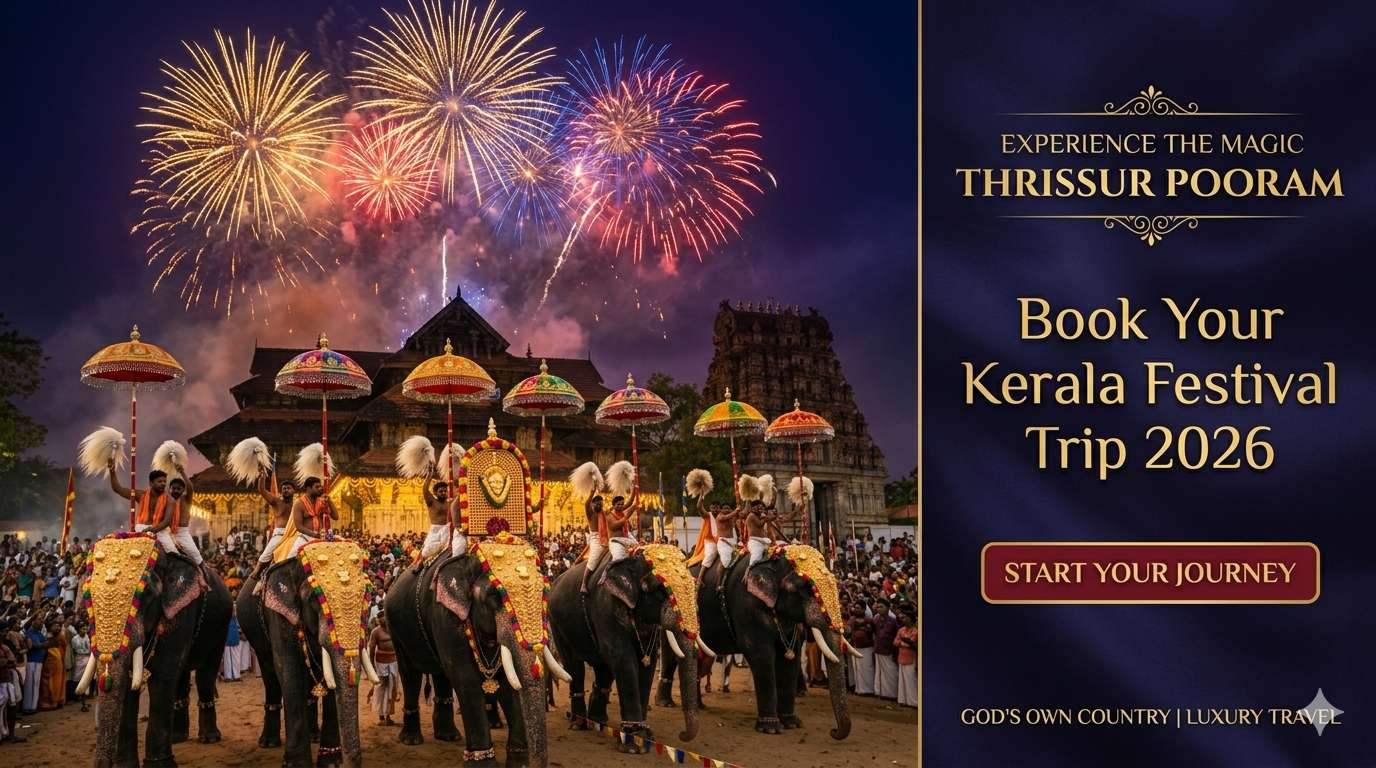
Best Things During Thrissur Pooram
Thrissur Pooram is often called the “Mother of all Poorams” because it’s not just a festival—it’s a grand spectacle of sound, color, and devotion. Here are the absolute best things to experience during Thrissur Pooram, ranked by uniqueness and visual impact:
1. Kudamattam (The Changing of Colored Umbrellas)
This is the heartbeat of Thrissur Pooram. Two rival groups (Paramekkavu and Thiruvambady) compete to display the most stunning parasols on the backs of caparisoned elephants.
What happens: Teams climb onto elephants and change the color of the umbrellas in perfect sync with the rhythmic beat of the chenda drums.
Best moment: When 30-40 umbrellas change from cream to saffron to peacock blue in under a minute—it’s electrifying.
2. The Ilanjithara Melam (Grand Percussion Ensemble)
Imagine over 200 drummers playing chenda and maddalam in perfect unison, without a single conductor.
Where: Under the ancient Ilanji tree at the Vadakkunnathan Temple.
Why it’s special: The tempo builds from slow to furious over two hours. The lead drummer changes cues between groups, creating a “duel” of rhythms that gives you goosebumps.
3. The Elephant Procession (Thekkottirakkam & Elanji Thara)
Up to 30 beautifully adorned elephants stand in a line, facing each other.
What to watch: The lead elephant carries the thidambu (replica deity). The golden nets (netripattam), bells, and painted foreheads are breathtaking.
Best photo op: Early morning or late afternoon when the sun hits the gold.
4. The Fireworks (Sample Vedikettu & Pakal Vedikettu)
Thrissur Pooram has two firework shows—one in the evening and one at dawn.
Evening show (Sample Vedikettu): A preview on the 6th day.
Dawn fireworks (Pakal Vedikettu): At 3–4 AM on the final day. Unlike Western fireworks, these are ground-based explosions (called chakra and kathina) that spin, whistle, and create massive fireballs. The ground shakes. It’s primal and unforgettable.
5. The Madhathil Varavu (The Royal Entry of Elephants)
On the 5th day, all participating temple deities arrive at the main ground.
Best part: The Panchavadyam (five-instrument orchestra) with kombu (curved horn), edakka, and timila. The slow, majestic walk of elephants through a sea of half a million people is pure theater.
6. The Crowd Energy (The “Pooram Vedi” Atmosphere)
Forget silent reverence—this is controlled chaos. Vendors shout, drummers sweat, devotees dance, and umbrellas pop open like flowers. The air smells of incense, sweat, and fried snacks.
Pro tip: Join a thattukada (street food stall) for Kallumakkaya (mussels), Pazham Pori (banana fritters), and Chai.
7. The Early Morning View (5–6 AM)
Most tourists come at noon. Mistake. Come at dawn. The elephants are being bathed, the drums start softly, and the golden sunrise lights up the temple pond. You’ll see old men in mundu offering prayers quietly before the madness begins.
Q1. When is Thrissur Pooram Festival 2026?
It is expected in 26th April or May 2026, based on the Malayalam calendar.
Q2. Is Thrissur Pooram safe for tourists?
Thrissur Pooram is generally safe for tourists, though it is extremely crowded (millions attend), demanding high vigilance. but due to large crowds, basic precautions are recommended.
Q3. How many days are enough for the festival?
For most major festivals, 3 to 5 days is considered enough to fully experience the atmosphere, key events, and local culture without feeling rushed.
Q4. What is special about Thrissur Pooram?
Its grand elephant procession, traditional music, and massive fireworks display make it unique.
Book Your Thrissur Pooram 2026 Trip
Festival season availability fills quickly. Early planning ensures better pricing and preferred accommodations.
Book your Thrissur Pooram tour package With Farebuzzertravel today.
Get a personalized itinerary, best flight deals, and hassle-free travel arrangements.
Contact us now to secure your 2026 festival trip.